Navigating the complex landscape of business investment can feel like charting unknown waters. Every decision, big or small, carries financial implications. This is where the power of Cost Analysis & ROI steps in, transforming uncertainty into actionable insights and helping you steer your organization toward smarter, more profitable outcomes.
It's more than just crunching numbers; it’s about understanding the true value and potential pitfalls of every initiative. By systematically evaluating costs against anticipated returns, you gain the clarity needed to make confident choices that drive growth and secure your company's future.
At a glance: Your essential takeaways
- Cost-Benefit Analysis (CBA) is your go-to framework for comparing project costs and benefits in monetary terms, making ROI calculations simpler and revealing hidden expenses.
- Key ROI Metrics include Net Present Value (NPV), Internal Rate of Return (IRR), and Payback Period, offering different angles on an investment's financial viability.
- A 5-step CBA process (Define Objectives, List Costs & Benefits, Monetize Intangibles, Calculate Metrics, Review & Decide) ensures thorough evaluation and improves success rates.
- The Cost of Inaction (COI) highlights the risks and lost opportunities of not pursuing a project, acting as a powerful complement to ROI.
- Integrating Tangible & Intangible factors, alongside behavioral economics, leads to a holistic, resilient decision-making strategy.
Why Cost Analysis & ROI is Your Business GPS
In today's fast-paced business environment, gut feelings alone won't cut it. Every dollar spent and every resource allocated needs to deliver tangible value. Cost Analysis & ROI provides the framework to objectively measure this value, ensuring that your investments are not just expenditures, but strategic moves designed to yield significant returns. It’s the process that reveals hidden costs, uncovers overlooked opportunities, and ultimately guides you towards the most lucrative paths.
Without robust analysis, projects can quickly become black holes for resources, draining budgets without delivering expected benefits. With it, you illuminate the potential outcomes, identify the best investment opportunities, and allocate capital where it can truly thrive.
The Cornerstone: Cost-Benefit Analysis (CBA)
At the heart of effective ROI calculation lies Cost-Benefit Analysis (CBA). Think of CBA as a financial translator, converting all aspects of a project – both expenses and benefits – into a common monetary language. This allows for a clear, apples-to-apples comparison, empowering you to make informed decisions that align with your financial goals. CBA helps streamline your ROI calculations, expose those sneaky hidden costs, and spotlight the investment opportunities with the highest potential.
Navigating the Numbers: Core ROI Metrics
To truly understand an investment's worth, you need to look beyond simple profit. These three metrics offer a comprehensive view:
- Net Present Value (NPV): This metric measures the total value of all future cash flows (inflows and outflows) over the life of an investment, discounted back to their present-day value. Why is this crucial? Because money today is worth more than the same amount of money tomorrow due to inflation and potential earnings. NPV uses a discount rate (typically 3–8%) to account for this "time value of money." A positive NPV suggests a project is likely to be profitable.
- Internal Rate of Return (IRR): The IRR estimates the annual growth rate an investment is expected to generate. It's the discount rate that makes the NPV of all cash flows equal to zero. If the IRR is higher than your minimum required rate of return (or cost of capital), the project is generally considered worthwhile.
- Payback Period: Simply put, this is the amount of time it takes for an investment to generate enough cash flow to recover its initial cost. While useful for gauging liquidity and risk, it doesn't consider the time value of money or cash flows beyond the payback point, so it’s best used in conjunction with NPV and IRR.
Your Step-by-Step Guide to a Robust Cost-Benefit Analysis
A thorough CBA doesn't have to be overwhelming. By breaking it down into these five clear steps, you can systematically evaluate any project and strengthen your decision-making process. Research consistently shows that well-defined objectives can boost project success rates by a significant 78%. A formal CBA process, while taking 2–6 weeks, can lead to a 23% higher ROI.
Step 1: Define Your Objectives with SMART Goals
Before you tally a single cost, you need to know what you're trying to achieve. Your objectives must be Specific, Measurable, Achievable, Relevant, and Time-bound (SMART).
- Example: Instead of "Improve sales," aim for "Increase online sales by 15% within 12 months by investing $200,000 in a new e-commerce platform." This clarity sets the stage for accurate measurement.
Step 2: List All Costs & Benefits — No Stone Unturned
This is where you cast a wide net, identifying every single financial implication. Think beyond the obvious.
- Direct Costs: These are the immediate, tangible expenses directly tied to the project.
- Example: Software licenses ($50,000), hardware purchases, consulting fees, initial labor.
- Indirect Costs: These are ongoing operational expenses or costs not directly attributed to the project but necessary for its function.
- Example: Annual software maintenance, staff training ($15,000/year), utilities, increased support needs.
- Opportunity Costs: Crucially, what are you giving up by choosing this project over another? This represents the value of the next best alternative you're forgoing.
- Example: Delaying another promising project due to resource allocation ($25,000 in lost revenue).
- Benefits: These can be direct revenue gains, cost savings, efficiency improvements, or risk reductions.
- Example: Increased sales, reduced operational expenses, improved productivity, avoided fines.
Step 3: Monetize the Intangible
Not everything comes with an obvious price tag, but that doesn't mean it lacks financial value. You need to assign reasonable monetary values to qualitative factors.
- Example: A 10% increase in customer satisfaction might translate into an additional $5,000 in monthly sales through repeat business and referrals. Similarly, improving employee retention could save $4,000 per departing employee in recruitment and training costs. Use industry benchmarks, historical data, surveys, or stakeholder assumptions to make these estimations.
Step 4: Crunch the Key Metrics
With all your costs and benefits quantified, it’s time to perform the calculations.
- Basic ROI: A quick, straightforward measure.
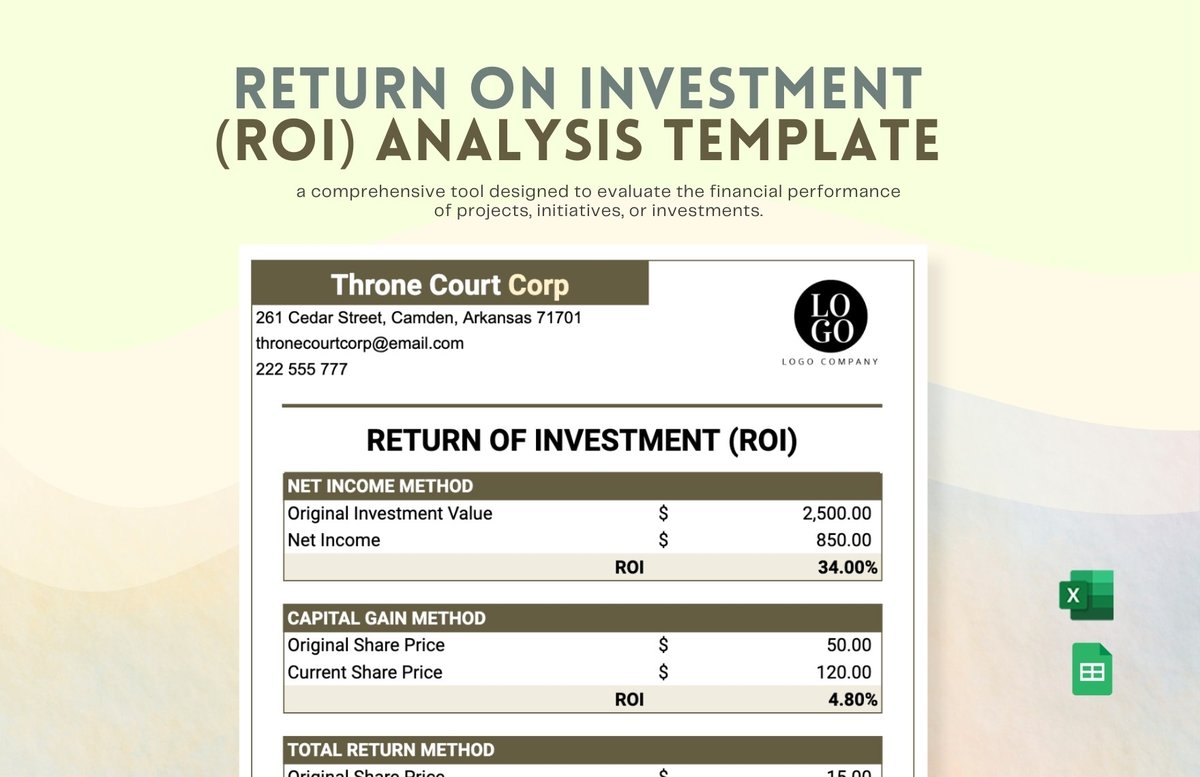
- Formula: (Net Benefits – Total Costs) / Total Costs × 100
- Example: If total benefits are $80,000 and costs are $50,000, then ROI = ($80,000 – $50,000) / $50,000 × 100 = 60%.
- NPV: Apply your chosen discount rate to future cash flows to get a true present-day value.
- Cost-Benefit Ratio: This compares the total anticipated benefits to the total anticipated costs. A ratio greater than 1 suggests the benefits outweigh the costs.
Step 5: Review, Refine, and Decide
The numbers are in, but the analysis isn't over.
Scrutinize your findings. Use visual aids like charts and graphs to make the data more digestible for stakeholders.
Crucially, perform sensitivity analysis. What happens if a key assumption changes? For instance, a 2% increase in material costs could reduce your NPV by $8,000. This helps you understand the project's robustness against different scenarios.
Based on this comprehensive review, you can then confidently make your decision.
Real-World Application: A Cloud Infrastructure Upgrade Case Study
Let's apply these steps to a common business scenario: upgrading to a new cloud infrastructure.
The Project: Migrating existing IT infrastructure to a more scalable and efficient cloud platform over three years.
Costs (3-Year Projection):
- One-time Expenses:
- Hardware and software licenses: $1.2 million
- Migration services: $450,000
- Staff training: $150,000
- Total One-time: $1.8 million
- Annual Operating Expenses:
- Cloud service fees: $240,000/year
- Maintenance and support: $85,000/year
- Total Annual: $325,000
- Contingency: An additional 15% added to total costs to account for unforeseen issues.
Benefits (3-Year Projection): - Reduced system downtime and improved reliability: $850,000
- Increased operational efficiency (automation, faster processing): $420,000
- Lower energy consumption costs: $95,000
- Reduced need for in-house IT support staff: $180,000
- Enhanced data security and compliance: (Monetized as avoided fines/reputational damage) $1,000,000
- Total Benefits: $2.55 million
Cost of Inaction (COI): Delaying this upgrade would lead to an estimated $300,000 per year in lost productivity and eroding competitive advantage due to aging systems.
Results: - Payback Period: Approximately 2.1 years (meaning the initial investment would be recouped in just over two years).
- Net Present Value (NPV): $1.8 million (using an 8% discount rate, indicating substantial long-term value).
- Cost-Benefit Ratio: 2.4:1 (for every dollar spent, $2.40 in benefits are gained).
This analysis clearly demonstrates the financial viability and strategic advantages of proceeding with the cloud upgrade.
Beyond the Obvious: The Cost of Inaction (COI)
While ROI focuses on the gains from taking action, its equally important counterpart, the Cost of Inaction (COI), illuminates the losses incurred by not acting. Often overlooked, COI represents the sum of lost opportunities, damage suffered, or additional costs that accumulate when a necessary decision is postponed or ignored. It’s a powerful concept because, as behavioral economics research suggests, decision-makers are often more motivated by the fear of loss (loss aversion) than the prospect of gain. Highlighting COI can create a critical sense of urgency within an organization.
ROI vs. COI: A 360-Degree View of Decisions
Understanding both ROI and COI is crucial for truly comprehensive decision-making.
- ROI (Return on Investment): Measures the efficiency and profitability of a particular investment. It's a direct financial indicator: (Net Profit / Investment Cost) × 100. A positive ROI signals a gain; negative indicates a loss.
- COI (Cost of Inaction): Quantifies the expense or detriment of not making an investment or taking a specific action. This isn't just a purely mathematical figure; it's transversal, impacting various departments like HR (talent loss), marketing (brand erosion), and R&D (missed innovation).
These two concepts are highly complementary. ROI helps you evaluate the upside of an opportunity, while COI reveals the potential downside of failing to seize it. Considering both provides a holistic, 360-degree evaluation, allowing for more robust resource allocation and strategic planning. This comprehensive framework also integrates other vital concepts like opportunity cost, payback period, NPV, IRR, risk assessment, intangible benefits, and even behavioral economics.
Highlighting the True Burden of Inaction
The COI isn't just about direct financial losses from missed sales or market share. It encompasses a broader range of consequences, many of which are indirect and intangible, yet deeply impactful:
- Loss of Competitiveness: Your rivals innovate while you stand still.
- Brand Erosion: Customers may perceive your brand as outdated or unresponsive.
- Regulatory Penalties: Failing to update systems or processes could lead to fines.
- Loss of Talent and Motivation: Employees may leave for more forward-thinking companies.
Quantifying COI can be complex precisely because it involves projecting the consequences of events that didn't happen. Tools like scenario analysis (modeling best, worst, and most likely outcomes) and risk assessment (evaluating the likelihood and severity of negative outcomes) become invaluable here.
The Interplay of Tangible and Intangible Benefits (and Costs)
While measurable profits and cost savings are undeniably important, ignoring intangible factors is a grave mistake. Benefits like enhanced employee engagement, improved customer satisfaction, and increased organizational agility are vital for long-term sustainability and growth. Similarly, the intangible costs of inaction—such as damaged reputation or a diminished capacity for innovation—can severely compromise your strategic position. A truly holistic approach integrates both quantitative analysis and qualitative insights.
Factors to Consider When Calculating COI and ROI
A robust analysis considers a multitude of factors specific to your organization and the market.
What Goes into Calculating COI:
- Severity of the Problem: How critical is the issue you're not addressing?
- Time: The longer you delay, the higher the cumulative cost.
- Available Resources: What could you be doing with existing resources if the problem were solved?
- Long-Term Consequences: What are the ripple effects years down the line?
- Impact on the Organization: Loss of resources, talent attrition, missed market opportunities, decreased customer loyalty, additional operational expenses, compliance risks, and broader social or environmental impacts.
Nuances of ROI Calculation:
- Payback Period: Provides a time dimension, showing how quickly initial investment is recovered.
- NPV & IRR: Account for the time value of money, giving a more accurate picture of long-term profitability.
- Opportunity Cost: Every investment choice implies a foregone alternative. ROI should never be considered in isolation.
- Influencing Factors: The type of investment, industry standards, competitive landscape, and your specific investment objectives all shape what constitutes a "good" ROI.
- Types of Profit: You might consider gross profit, net profit, or focus on short-term vs. long-term gains.
When making significant capital expenditure decisions, such as investing in large-scale equipment, a thorough cost analysis is non-negotiable. For instance, understanding the total cost of ownership (TCO) for something like your guide to industrial generators involves direct purchase costs, installation, fuel, maintenance, and projected lifespan against the benefits of reliable power and avoided downtime.
Expert Insights and Leadership Recommendations
To truly embed Cost Analysis & ROI into your organization's DNA, leadership must champion a data-driven culture.
- Regular Review Cycles: Don't treat CBA as a one-off event. Implement routine reviews to reassess project viability against changing conditions.
- Focus on Key Metrics: Continuously monitor NPV, ROI, and Cost-Benefit Ratios, comparing them against industry averages to benchmark performance.
- Stay Agile with Market Conditions: The competitive landscape and technological shifts are constant. Update your projections regularly to reflect these changes.
- Prioritize Stakeholder Feedback: Insights from employees, customers, and partners can uncover hidden costs or benefits that quantitative data alone might miss.
- Robust Risk Assessment: Actively assess market volatility and potential project hurdles. Adjust your risk management strategies proactively.
Answering Your Burning Questions About CBA & ROI
What's the right discount rate for NPV calculations?
The appropriate discount rate depends on your project's risk profile and your organization's cost of capital (often using the Weighted Average Cost of Capital, or WACC). For riskier projects, adding a 'risk premium' to your base discount rate is a wise move.
What are the most common mistakes in CBA?
- Ignoring Hidden Costs: Overlooking ongoing maintenance, training, or the crucial cost of opportunity.
- Unrealistic Assumptions: Overly optimistic benefit projections or underestimating costs can skew results dramatically.
- Neglecting Non-Monetary Factors: Failing to account for critical intangibles like customer satisfaction or employee morale can lead to suboptimal decisions.
How do I incorporate intangible benefits into my analysis?
Assign a reasonable monetary value! Customer satisfaction, for instance, can be quantified through increased retention rates, higher referral volumes, and an improved brand reputation leading to pricing power. Use surveys, industry benchmarks, historical data, and expert stakeholder assumptions to convert these qualitative benefits into tangible dollar figures.
Your Next Move: Building a Data-Driven Culture
The integration of ROI, COI, opportunity cost, payback period, risk assessment, intangible benefits, and behavioral insights isn't just about making individual project decisions. It's about empowering your organization to build a resilient, forward-thinking strategy. By mastering Cost Analysis & ROI, you enable more effective resource allocation, prioritize initiatives for sustainable value, and build the confidence to navigate uncertainty. Start by applying these frameworks to your next big decision, fostering a culture where every investment is strategically justified and every action (or inaction) is understood for its true cost and benefit.