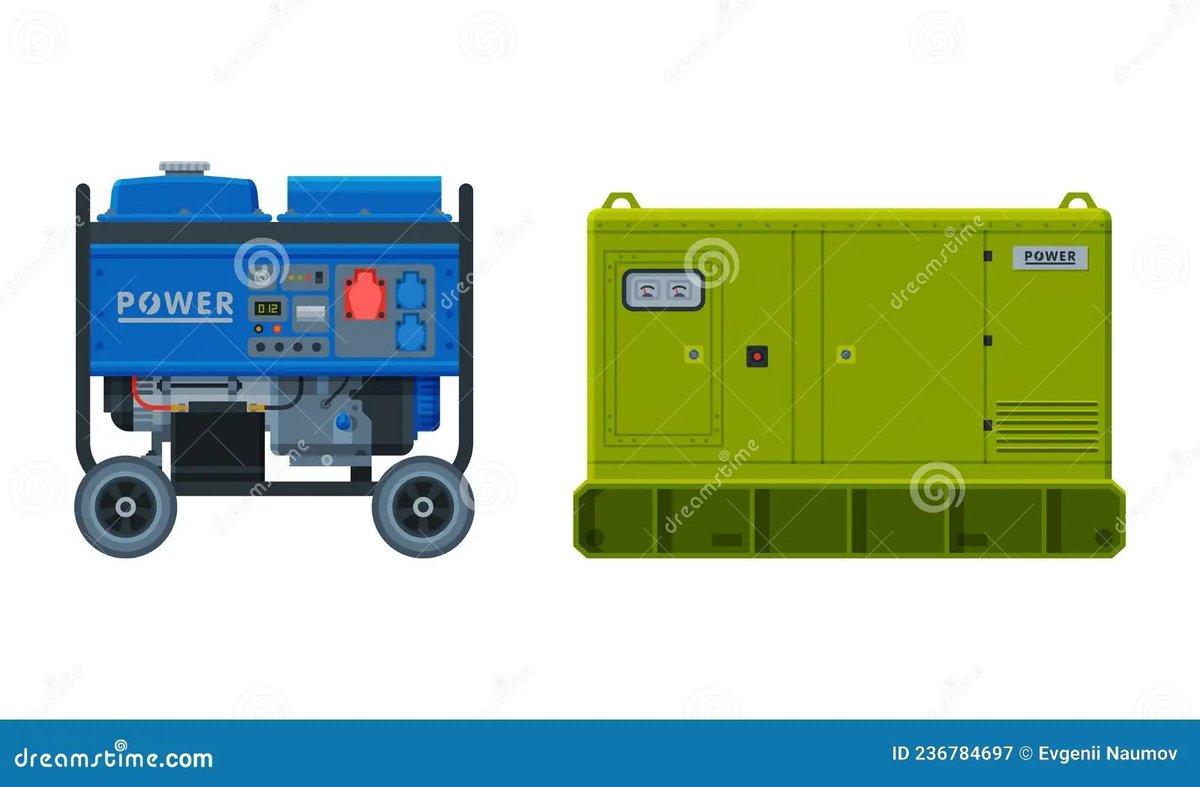
In an era where every second of downtime costs businesses dearly, industrial generators stand as the silent guardians of continuous operation. These aren't your typical home backup units; we're talking about high-capacity, three-phase powerhouses engineered for heavy-duty performance, supplying rock-solid electricity to everything from sprawling factories and critical hospitals to data centers and remote mining facilities. Understanding the diverse Industrial Generator Types & Technology available is crucial for any business that cannot afford to hit the "off" switch, whether for planned outages, grid failures, or simply to power operations where no grid exists.
Whether you're safeguarding patient lives, processing millions of transactions, or keeping production lines humming, selecting the right industrial generator isn't just a purchase – it's a strategic investment in resilience, productivity, and profitability. Let's dig into what makes these indispensable machines tick and how to navigate the options.
At a Glance: Powering Your Business with Confidence
- High-Capacity Power: Industrial generators deliver substantial three-phase power, typically from 50 kW to multiple megawatts, essential for large-scale operations.
- Core Components: Every generator relies on an engine (diesel or natural gas), an alternator to convert mechanical energy to electricity, and sophisticated controls for stable, safe operation.
- Fuel Options Matter: Diesel offers unmatched torque and reliability, natural gas boasts cleaner emissions and unlimited pipeline runtime, while bi-fuel options combine benefits.
- Sizing is Critical: Correctly matching generator output to your specific load, accounting for starting surges, power factor, and derating factors, is non-negotiable for efficiency and longevity.
- Duty Cycles Define Use: Choose between Standby (emergency), Prime (main power for extended periods), or Continuous (unlimited, constant load) based on your operational needs.
- Compliance is Key: Generators must adhere to strict environmental (EPA, EU Stage V) and safety (NFPA 110, UL 2200, ISO 8528) standards to ensure legality and reliable performance.
- Smart Planning Pays Off: Proper installation (ventilation, fuel systems), advanced controls (paralleling, microgrids), and diligent maintenance are vital for maximizing uptime and ROI.
The Unseen Powerhouse: What Defines an Industrial Generator?
At its core, an industrial generator is a complex system designed to convert mechanical energy into reliable electrical power. Unlike smaller commercial or residential units, these are robust, purpose-built machines engineered for demanding environments and critical loads. They typically deliver three-phase power, making them suitable for heavy industrial motors and machinery, and their power ratings often start around 50 kilowatts (kW), easily soaring into multiple megawatts (MW). You'll find them operating as standalone units or, for even greater resilience and scalability, ganged together in paralleled banks.
The magic happens through three interconnected systems:
- The Engine: The Heartbeat of Power
This is where the mechanical energy originates, typically powered by diesel or natural gas. Diesel engines are renowned for their robust compression ignition, delivering strong torque and rapid response—perfect for sudden, heavy loads. Natural gas engines, on the other hand, use spark ignition, offering quieter operation and significantly cleaner emissions, which is a major plus in urban or environmentally sensitive areas. A precision governor constantly monitors and adjusts engine speed, ensuring a steady 50 or 60 Hz frequency, vital for sensitive electronics. - The Alternator: Turning Motion into Electricity
Connected directly to the engine, the alternator is the component that transforms the engine's mechanical rotation into alternating current (AC) electricity. Think of it as the muscle car of your electrical system. To maintain stable output even as your facility's load fluctuates, an Automatic Voltage Regulator (AVR) diligently stabilizes the voltage. The engine's rotational speed, commonly 1800 RPM for 60 Hz systems, directly dictates the frequency and quality of the electrical output. - Controls & Protection: The Brains and Brawn
Modern industrial generators are smart machines. Their control systems leverage programmable logic controllers (PLCs) to manage everything from automatic startup to load balancing. Crucially, Automatic Transfer Switches (ATS) or integrated switchgear detect power outages and seamlessly transfer your facility's load to the generator, often within seconds. A network of sensors constantly monitors vital parameters like engine speed, oil pressure, and coolant temperature. Should any critical issue arise, safety systems automatically shut down the unit, protecting your investment and preventing further damage. Beyond basic operation, these systems often include remote monitoring, alarms, and auto-start functions, all designed to meet stringent standards like NFPA 110 for emergency power.
Fueling Reliability: A Deep Dive into Industrial Generator Types
When choosing an industrial generator, one of the most fundamental decisions you'll make revolves around fuel type. Each option brings distinct advantages and considerations to the table, directly impacting performance, cost, and environmental footprint.
Diesel: The Unmatched Workhorse
Diesel generators are the undisputed champions of raw power and reliability in industrial settings.
- Advantages: They offer unmatched torque, making them ideal for handling heavy motor loads and sudden power demands with minimal voltage dip. Diesel is easy to store and provides quick response, ensuring power restoration in moments. For remote locations or extended outages, their excellent fuel efficiency and energy output per gallon are significant benefits.
- Considerations: Diesel units typically require more routine maintenance, including fuel polishing and water separation, to prevent issues. Emissions, while significantly cleaner with modern engines, still require careful consideration and compliance with regulations like EPA Tier standards.
- Ideal Applications: Manufacturing plants, mining operations, oil & gas facilities, construction sites, and remote critical infrastructure where robust, reliable power is paramount.
Natural Gas: The Cleaner, Quieter Option
Natural gas generators are gaining significant traction, particularly where environmental concerns and long-term operational costs are key drivers.
- Advantages: They produce significantly cleaner emissions than diesel, making them a preferred choice for urban installations, hospitals, and facilities with strict environmental mandates. Operation is typically quieter, which can be a major benefit for noise-sensitive areas. When connected to a pipeline, natural gas generators offer virtually unlimited runtime, eliminating the need for on-site fuel storage and refueling logistics. Their cost stability can also be attractive compared to volatile diesel prices.
- Considerations: While excellent, natural gas engines generally have a slightly slower transient response compared to diesel, meaning they might take a fraction longer to stabilize under sudden, large load changes. They also require a robust, stable gas supply and adequate pressure.
- Ideal Applications: Data centers, hospitals, telecommunications hubs, and any facility prioritizing continuous runtime, reduced emissions, and lower noise levels.
For a deeper dive into which fuel might be right for you, consider exploring the nuances of diesel vs. natural gas generators.
Bi-Fuel/Dual-Fuel: Blending the Best
Bi-fuel or dual-fuel generators offer a compelling compromise, often starting on diesel before seamlessly transitioning to incorporate natural gas. This configuration provides the rapid response and initial torque of a diesel unit while leveraging the cost savings and reduced emissions of natural gas for sustained operation. It's a smart way to balance flexibility, efficiency, and environmental responsibility.
Other Niche Fuel Types
While less common, other fuel types exist for specific applications or policy-driven initiatives:
- Heavy Fuel Oil (HFO): Used in very large-scale power generation, often for baseload power in remote locations.
- Propane (LPG): Typically for smaller commercial units, but can be used for industrial applications where natural gas isn't available and diesel storage is problematic.
- Renewable Diesel (R-D): A cleaner-burning alternative to traditional diesel, made from biomass, offering a lower carbon footprint without sacrificing performance.
Beyond the Basics: Configurations That Deliver
Beyond fuel type, how a generator is physically arranged and intended to operate also defines its suitability for different industrial needs.
- Stationary Units: These are the most common industrial generators, permanently installed on concrete pads. They're typically housed in weatherproof, sound-attenuated enclosures for outdoor placement or dedicated generator rooms with robust ventilation systems for indoor installation. Their robust construction and extensive cooling systems make them ideal for long-term, critical applications.
- Mobile Units: When power needs to move, mobile generators are the answer. Mounted on trailers, these units are designed for easy transport and rapid deployment. They are indispensable for construction sites, outdoor events, emergency response, and temporary power solutions. Often, they come with quick-connect ATS/switchgear options for fast integration.
- Paralleled Systems: For applications demanding superior reliability, scalability, and maintenance flexibility, paralleled systems are the gold standard. This involves connecting two or more generators to operate as a single, larger power source. If one unit requires maintenance or fails, the others can pick up the load, ensuring uninterrupted power. We'll delve deeper into paralleling later.
Understanding Duty Ratings: Matching Power to Purpose
Industrial generators are specifically rated for their intended duty cycle, a critical factor in selecting the right unit for your application:
- Standby Duty: These generators are designed for emergency power during utility outages. They're not intended for continuous primary power but are built to start automatically and run reliably for the duration of an outage. NFPA 110 compliance often dictates their use in critical life-safety applications.
- Prime Duty: A prime-rated generator can serve as the primary power source for a facility in areas without grid access or where the grid is unreliable. It's designed to run continuously for long periods, handling variable loads. There's typically a 10% overload capability for short durations.
- Continuous Duty: For applications requiring constant, uninterrupted power at a consistent load for virtually unlimited hours, a continuous-duty generator is the choice. These are often used in remote mining operations, large industrial processes, or utility-scale power generation where the generator is the sole source of power.
Getting the Size Right: A Critical Step to Uptime
Under-sizing a generator can lead to frequent overloads, premature wear, and unreliable power. Over-sizing wastes capital, fuel, and can cause issues like "wet stacking" in diesel units (unburned fuel accumulation). Precision is key when sizing your industrial generator.
Here’s a methodical approach:
- Load Audit: Know Your Demands
Start by meticulously listing all major electrical loads in your facility – HVAC, pumps, lighting, IT infrastructure, machinery, etc. For each, identify its running power in kilowatts (kW). Don't forget non-essential loads you might shed during an outage. - Account for Starting Surges (Inrush Current)
Motors, especially large ones, draw significantly more current upon startup (2-6 times their normal running current). This "inrush current" creates peak loads that your generator must handle. Technologies like soft starters or Variable Frequency Drives (VFDs) can help mitigate these surges, making generator sizing more manageable. - Factor in Power Factor (PF)
Industrial systems often have inductive loads, meaning they operate at a power factor (PF) less than 1.0. A typical industrial PF is around 0.8. Generators are often rated in kVA (kilo-volt-amperes), which is the apparent power. To convert, use:kW = kVA × PForkVA = kW / PF. Ensure your generator’s kVA rating can comfortably meet your kW demand after accounting for power factor. - Derating for Environment
Generator performance is affected by environmental conditions. High altitudes, elevated ambient temperatures, or even lower-quality fuel can reduce a generator's rated output. Always apply appropriate derating factors based on your site's specific conditions. - Headroom & Redundancy: Building in Resilience
- Headroom: To maximize fuel efficiency, extend generator longevity, and provide a buffer for future expansion, aim to operate your generator at 70–80% of its rated load under normal conditions. This prevents overworking the unit and gives you capacity to spare.
- Redundancy (N+1): For mission-critical applications (hospitals, data centers), N+1 redundancy is often mandated. This means you install one additional generator beyond what's theoretically required to carry your full load. For example, if your total load requires 300 kW, and you plan to use 150 kW units, you might install three 150 kW units (3 x 150 kW = 450 kW), providing 150 kW of redundancy. This ensures uninterrupted power even during maintenance or an unexpected failure of one unit.
Sizing Example in Practice:
Imagine a manufacturing plant with a typical running load of 160 kW, but with motor starts causing a peak demand of 220 kW. After derating for your specific altitude and temperature, let's say this adjusted peak load becomes 230 kW. - Single Unit: To provide a comfortable 25% buffer for efficiency and future needs, you'd calculate 230 kW * 1.25 = ~288 kW. A 300 kW generator would be an ideal single-unit choice.
- N+1 Redundancy: For continuous uptime, especially if you need to perform maintenance without shutting down, two 175 kW units in parallel (total 350 kW capacity) would provide N+1 redundancy. One unit could carry the full 160 kW load, leaving the second unit ready to assist or take over.
Where Industrial Generators Shine: Key Industry Applications
Industrial generators are not one-size-fits-all. Different industries have unique power demands and regulatory landscapes that dictate specific generator features.
- Hospitals & Clinics: Life-safety is paramount here. These facilities require Emergency Power Supply (EPS) systems compliant with NFPA 110 Level 1 standards, mandating automatic power transfer within 10 seconds. Redundant ATS/switchgear, continuous fuel monitoring, and robust on-site fuel storage for 24–72 hours of autonomy are standard. Such critical infrastructure necessitates unwavering emergency power systems.
- Data Centers & IT Facilities: Uptime is their lifeblood. Data centers demand generators certified to ISO 8528 Class G3, ensuring extremely fast response and stable performance, critical for sensitive IT equipment. Paralleling multiple generators for N+1 redundancy, seamless integration with Uninterruptible Power Supplies (UPS), and advanced remote monitoring are common.
- Manufacturing & Industrial Plants: From CNC machines to robotic assembly lines, industrial plants need precise voltage and frequency control to prevent disruptions to Programmable Logic Controllers (PLCs) and other automation systems. Diesel generators, with their high torque and transient response, are often preferred for handling the inductive loads of heavy motors.
- Mining, Oil & Gas Operations: These remote, often harsh environments demand prime-duty, robustly built generators. Containerized units designed to withstand dust, vibration, and extreme temperatures are common. Remote monitoring, advanced fuel tracking, and extended maintenance intervals are crucial for sites hundreds of miles from the nearest service center.
- Water & Wastewater Treatment: Heavy pump loads characterize these facilities, requiring generators capable of handling high inrush currents. Corrosion-resistant enclosures are essential due to the often humid and chemically aggressive environments. Reliability is critical to prevent environmental disasters.
- Telecom & Remote Sites: Compact, fuel-efficient generators with advanced telemetry and remote diagnostics are vital for maintaining cellular towers and communication hubs in isolated areas. Anti-theft protection and robust enclosures are also important considerations.
- Construction & Events: Mobile, sound-attenuated generators with quick-connect ATS/switchgear options are the stars here. They offer flexibility for temporary power needs, whether powering heavy equipment on a job site or illuminating a large outdoor festival.
Navigating the Rules: Compliance, Codes & Standards
Operating industrial generators comes with a host of regulatory requirements designed to ensure safety, minimize environmental impact, and guarantee performance. Ignoring these can lead to costly fines, operational shutdowns, and even legal liabilities.
- Emissions Standards:
- U.S. EPA Tier Standards (Tier 1–4): These regulations dictate the permissible levels of nitrogen oxides (NOx), particulate matter (PM), carbon monoxide (CO), and hydrocarbons (HC) for diesel engines. Modern generators typically comply with Tier 4 Final, which often requires Ultra-Low Sulfur Diesel (ULSD) fuel and sophisticated aftertreatment systems like Selective Catalytic Reduction (SCR) with Diesel Particulate Filters (DPF).
- Europe’s EU Stage V: Similar to EPA Tiers, these standards set stringent limits for non-road mobile machinery (NRMM) engines, emphasizing particulate matter and NOx reductions.
- NFPA 110: Emergency and Standby Power Systems:
This widely adopted standard governs the installation, maintenance, and testing of emergency power systems. For critical applications like hospitals, it mandates specific requirements for auto-start times (typically within 10 seconds), fuel autonomy, testing protocols, and transfer switch performance to ensure life-safety. - UL 2200: Stationary Engine Generator Assemblies:
This Underwriters Laboratories standard certifies the mechanical and electrical safety of complete generator assemblies, ensuring they meet rigorous design and construction criteria. - ISO 8528: Reciprocating Internal Combustion Engine Driven A.C. Generating Sets:
An international standard that sets performance requirements for generator sets, covering aspects like voltage regulation, frequency stability, and transient response under varying loads. For data centers, for instance, Class G3 certification is often required for fast, stable performance. - IEEE 1547: Standard for Interconnection and Interoperability of Distributed Energy Resources with Associated Electric Power Systems:
Crucial for generators that will be paralleled with the utility grid or integrated into microgrids, this standard governs how these distributed energy resources interconnect and perform safely with the larger power system. - NFPA 30 & Local Codes:
These codes regulate the safe storage, handling, and use of flammable and combustible liquids, primarily impacting fuel tank design, spill containment, and venting for diesel and natural gas systems. Beyond national standards, always check local building, fire, and environmental codes, which may impose additional requirements for noise control, setback distances from property lines, and specific environmental permitting.
Actionable Insight: Before finalizing any purchase, always request comprehensive emission certificates, compliance documentation, and factory test reports from your vendor. This verifies the generator meets all applicable standards for your specific location and application.
Building for Power: Smart Installation & Site Planning
A generator is only as effective as its installation. Careful site planning and professional installation are paramount to ensuring optimal performance, longevity, and compliance.
- Placement & Ventilation: Breathing Room for Big Power
Outdoor units typically reside on robust concrete pads, protected by weatherproof, sound-attenuated enclosures. For indoor installations, a dedicated generator room is essential. This requires meticulous ventilation planning: - Exhaust Routing: High-temperature exhaust must be safely routed outdoors, often through insulated piping, ensuring minimal backpressure on the engine.
- Airflow: Proper sizing of air intake and exhaust louvers and dampers is critical to provide balanced airflow, dissipate heat, and prevent engine overheating.
- Fuel System Design: The Lifeline
Whether diesel or natural gas, the fuel system is a critical component. - Diesel: Involves main storage tanks, often with smaller "day tanks" near the generator, double-wall containment, and leak detection systems. Robust fuel filtration and polishing systems are vital to prevent contamination. Compliance with NFPA 30 and EPA regulations for venting, spill prevention, and containment is non-negotiable. Fuel autonomy of 24–72 hours is common for critical facilities.
- Natural Gas: Requires appropriate gas line sizing, pressure regulation, and leak detection, all installed according to local codes and utility requirements.
- Electrical Integration: Seamless Transitions
This involves precise installation of appropriately rated Automatic Transfer Switches (ATS) or integrated switchgear, circuit breakers, and grounding systems. The ATS ensures a seamless and safe transition between utility power and generator power. Proper electrical design covers cable sizing (to minimize voltage drop and safely carry current), neutral bonding, and robust short-circuit protection to protect equipment and personnel. - Noise & Vibration Control: Keeping the Peace
Industrial generators are powerful machines, and power often comes with noise and vibration. Typical noise levels range from 70–75 dB(A) at 7 meters without significant attenuation. To mitigate this: - Vibration Isolators: Install generators on spring or rubber isolators to prevent vibration from transferring to the building structure.
- Acoustic Barriers & Enclosures: Sound-attenuated enclosures are standard for outdoor units. Indoor installations may require acoustic panels, baffles, and strategic room design to minimize sound propagation.
The Brains Behind the Brawn: Controls, Paralleling & Microgrids
Modern industrial generators are more than just engines and alternators; they are intelligent systems capable of sophisticated power management.
Paralleling: Strength in Numbers
Paralleling allows multiple generators to operate in unison, sharing the electrical load. This configuration offers distinct advantages:
- Enhanced Reliability: If one generator goes offline for maintenance or an unexpected fault, the remaining units can continue to supply power, drastically reducing downtime.
- Scalability: You can add generators as your power needs grow, without replacing your entire system.
- Maintenance Flexibility: Individual generators can be taken offline for routine service without interrupting the facility's power supply.
Synchronization & Control: Harmonic Power
For generators to operate in parallel, they must be precisely synchronized, meaning their voltage, frequency, and phase must align perfectly.
- Electronic Governors: These advanced systems maintain a steady 50/60 Hz frequency, often with "droop" control (slight frequency reduction to encourage load sharing) or "isochronous" control (maintaining constant frequency regardless of load, common in microgrids).
- Synchronizers: These devices automatically adjust generator parameters to match them before they are connected in parallel.
- Advanced ATS/Switchgear: Modern transfer switches and switchgear systems enable closed-transition transfers, where the generator momentarily parallels with the utility before disconnecting, ensuring no momentary power interruption (a "break-before-make" transfer).
To learn more about how this complex synchronization works to ensure seamless power delivery, explore generator paralleling for enhanced reliability.
Monitoring & Integration: Keeping an Eye on Everything
Sophisticated control panels and remote monitoring capabilities are standard.
- SCADA/BMS Integration: Supervisory Control and Data Acquisition (SCADA) or Building Management Systems (BMS) provide a centralized hub for remote visibility, allowing operators to track critical parameters like load, fuel levels, engine temperature, and alarm status from anywhere.
- Automated Functions: These systems can often automate tasks like periodic load bank testing, maintenance scheduling, and event logging for compliance and troubleshooting.
Microgrids & Hybrid Power: The Future of Resilience
Industrial generators are increasingly integrated into microgrids, combining them with renewable energy sources (like solar PV) and battery storage. This hybrid approach offers:
- Demand Response: The ability to reduce grid reliance during peak demand or high utility costs.
- Grid Independence: Enhanced resilience, allowing facilities to "island" themselves from the main grid during outages.
- Energy Efficiency: Optimizing power generation based on real-time needs and available renewable resources.
Keeping the Lights On: Fuel Use, Runtime & Autonomy
Understanding fuel consumption is key to budgeting and ensuring sufficient autonomy for your operations. Fuel use, typically measured in liters per hour (L/hr), varies directly with the load on the generator.
- Diesel Generators:
- Consumption: Generally, diesel generators consume approximately 0.18–0.22 L/hr per kW at full load. For example, a 300 kW diesel unit operating at full capacity would use around 54–66 L/hr. This consumption drops proportionally as the load decreases.
- Runtime & Storage: On-site fuel tanks commonly provide 24–72 hours of runtime for critical applications, with larger tanks offering even longer autonomy. Regular fuel polishing and water separation are vital to maintain fuel quality and prevent engine issues, especially with modern ULSD fuels that are more susceptible to microbial growth.
- Natural Gas Generators:
- Consumption: While measured differently, natural gas consumption also scales with load.
- Runtime & Supply: The primary advantage is continuous fuel supply when connected to a pipeline. This eliminates the need for on-site refueling and extensive storage, providing virtually unlimited runtime. However, ensuring a stable gas supply and adequate pressure from the utility is paramount.
Mastering Reliability: Your Maintenance & Service Program
Consistent maintenance is not an option; it's a necessity for ensuring the longevity and reliable performance of your industrial generator. A robust service program prevents unexpected failures and maximizes your return on investment.
- Preventive Service: The Basics
Just like a car, industrial generators need routine care. This includes regular oil and filter changes, coolant level and quality checks, and air and fuel filter replacements. Following the manufacturer's recommended service intervals is crucial. - Battery & Block Heaters: Ready for Anything
Generator batteries are the key to immediate startup, especially in cold weather. Regular inspection, cleaning terminals, and load testing are vital. Block heaters, which keep the engine coolant warm, are essential to ensure the generator starts quickly and reaches operational temperature efficiently, particularly for standby units. - Exercise & Load Bank Testing: Proving Performance
- Monthly Exercise Runs: Running your generator monthly for a short period (often 30 minutes under a light load) helps lubricate components and cycle fluids.
- Annual Load Bank Testing: This is a non-negotiable step. An annual load bank test involves connecting a resistive load bank to the generator, forcing it to run at or near its rated output. This confirms the generator can perform to its specifications, prevents "wet stacking" (a common issue in diesel generators that rarely run under significant load), and verifies the entire system's performance under stress.
- Condition Monitoring & Service Contracts: Proactive Protection
Advanced condition monitoring using vibration sensors, oil analysis, and coolant testing can detect early signs of wear or impending failure, allowing for proactive maintenance before a major breakdown occurs. Engaging in service-level agreements (SLAs) with qualified technicians ensures expert support, preventative maintenance scheduling, and rapid response in an emergency. For in-depth guidance on keeping your system running smoothly, check out our maintenance tips.
The Real Cost: Understanding Total Cost of Ownership (TCO)
Investing in an industrial generator involves more than just the sticker price. A true understanding requires considering the Total Cost of Ownership (TCO) over its lifespan.
- CapEx (Initial Costs):
This encompasses the generator unit itself, which varies significantly based on brand, power rating (kW/kVA), fuel type, enclosure type (open-skid, sound-attenuated), EPA Tier/EU Stage compliance (higher tiers cost more due to aftertreatment), and the complexity of associated equipment like ATS/switchgear. Higher quality components and advanced control systems will also impact the initial outlay. - Installed Costs:
Beyond the generator, you'll incur costs for site preparation (concrete pad, grading), cabling and electrical hookups, fuel line installation (including tanks, pumps, and piping), exhaust routing, ventilation systems, and necessary permits. These "soft costs" can add anywhere from 25–40% to the overall project cost. - OpEx (Operational Costs):
This is the ongoing expenditure over the generator's life and includes: - Fuel: The most significant ongoing cost, directly tied to run hours and fuel efficiency. Diesel generators may have higher fuel costs per hour than natural gas if gas prices are low and supply is readily available, but natural gas generators may have higher upfront engine costs.
- Preventive Maintenance: Scheduled service, oil, filters, coolant, and minor part replacements.
- Remote Monitoring & Connectivity: Fees for advanced monitoring services and data plans.
- Load Bank Testing: Annual costs for professional load bank testing.
TCO Insight: While the initial investment might seem substantial, consider the potential losses from downtime. For many industrial operations, avoiding even one 8-hour production loss due to a power outage can represent a significant return on the generator investment, making it a critical asset rather than just an expense.
Making the Right Choice: Your Vendor Comparison & Buying Checklist
Selecting the right industrial generator is a significant decision. Arm yourself with information and a clear checklist when engaging with vendors.
Key Specifications to Compare:
- Rated Output (kW/kVA): Ensure it meets your calculated load requirements with adequate headroom.
- Voltage & Phase Options: Confirm compatibility with your facility's electrical system (e.g., 480V, 3-phase).
- Transient Response Class: Especially critical for data centers and sensitive electronics (e.g., ISO 8528 Class G3).
- Engine & Alternator Brands: Reputable brands typically offer better reliability and parts availability.
- Controller Brand & Features: Look for advanced controls, remote monitoring capabilities, and ease of use.
- Noise Level & Enclosure Type: Does it meet local noise ordinances? Is the enclosure robust and weather-appropriate?
- Generator Fuel Tank & Runtime: Does it provide sufficient autonomy for your critical operations?
- Warranty: Understand what's covered and for how long.
- Local Service & Parts Availability: Crucial for rapid repairs and routine maintenance.
Essential Questions to Ask Vendors:
- "Can this system be expanded or integrated into a paralleling or N+1 redundancy setup for future growth or enhanced reliability?"
- "What are the ambient temperature limits and derating factors for this specific model at my facility's altitude and typical operating conditions?"
- "What is the estimated delivery, commissioning, and factory testing timeline for this generator?"
- "Is factory training for our maintenance staff, comprehensive documentation, and ongoing technical support included or available?"
- "Can you provide references for similar installations in our industry or region?"
- "What are the total installed costs you project, including permitting, site prep, and electrical integration?"
Common Questions About Industrial Generators (FAQs)
What's the difference between an industrial and a commercial generator?
Industrial generators are designed for much larger scale, heavy-duty performance, and continuous operation in demanding environments. They typically provide three-phase voltages (ranging from 208V up to 13.8kV), feature rugged designs, and often meet prime or continuous duty cycles. They adhere to stringent standards like NFPA 110 and ISO 8528. Commercial generators, while still powerful, are generally smaller, designed for lighter loads, shorter runtimes, and may only offer single-phase power, suitable for small businesses or retail spaces.
Can industrial generators really run continuously for weeks or months?
Yes, prime-rated or continuous-duty industrial generators are engineered for extended, uninterrupted operation. With proper sizing, regular preventive maintenance, and a continuous fuel supply (especially natural gas from a pipeline or diligent diesel refueling), these units can reliably run for weeks or even months. Standby-rated generators, however, are specifically for shorter, emergency-based operations during utility outages and are not designed for continuous prime power.
What does "N+1 redundancy" mean for industrial generators?
N+1 redundancy is a critical strategy for mission-critical applications to ensure uninterrupted power. It means having one additional generator (the "+1") beyond the minimum number ("N") required to carry your entire facility's full load. For example, if your total power requirement is 300 kW, and you have three 150 kW generators (total 450 kW), then "N" would be two generators (300 kW), and you have one extra (the "+1"). This configuration allows for maintenance on one unit or the failure of any single generator without impacting your facility's power supply, simplifying load management and supporting compliance for critical infrastructure like hospitals or data centers.
Your Next Steps to Uninterrupted Power
Navigating the world of industrial generators can seem daunting, but armed with the right knowledge, you're better positioned to make informed decisions. The key lies in a thorough understanding of your facility's specific power needs, the environmental and regulatory landscape, and the long-term operational costs.
Don't go it alone. Partner with experienced industrial generator specialists who can conduct comprehensive load analyses, design compliant systems, and provide reliable installation and ongoing support. Investing in the right Industrial Generator Types & Technology isn't just about buying a piece of equipment; it's about securing your operations, safeguarding your assets, and ensuring the unwavering continuity of your business in an unpredictable world. For even more insights and detailed guides on industrial power solutions, you can always Learn more about industrial generators.